


A PDF can look completely normal when you open it, which is why this issue confuses so many people. The page looks readable, the document seems finished, and nothing feels unusual until you try to copy one paragraph, and the result comes out empty, broken, or badly pasted.
That usually gives you the wrong conclusion. Many people assume the file is damaged or the viewer is failing, but the real reason is often much simpler. One PDF contains a usable text layer that can be selected and copied, while another PDF only shows an image of text. The words are visible on the page, but they are not stored in a form that normal copying can use.
This article explains why that happens, how to check what kind of PDF you have, and when direct PDF to Text or OCR makes more sense. It also connects the problem with the way texttopdf.net separates normal PDF text extraction from PDF OCR.
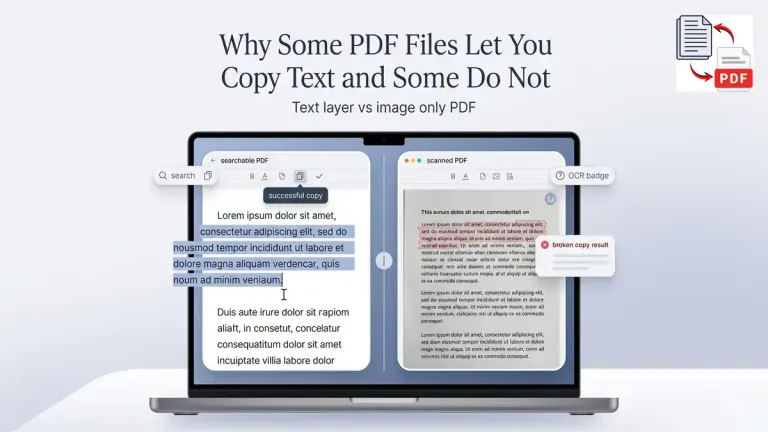
Why This Problem Happens So Often
Two PDFs can look almost the same on screen while behaving in very different ways when you try to copy text. One file may come from a word processor, a browser export, or another digital workflow. Another file may come from a paper scan, a photographed page, or an old record saved as PDF.
The visual appearance hides the real difference. A readable page does not always mean the document contains live text. That is why users often trust what they see, then get confused when copying fails.
If you want the broader explanation of how editable text is pulled out from normal documents, you can also read How to Extract Editable Text from PDF Files.
What Makes a PDF Copyable
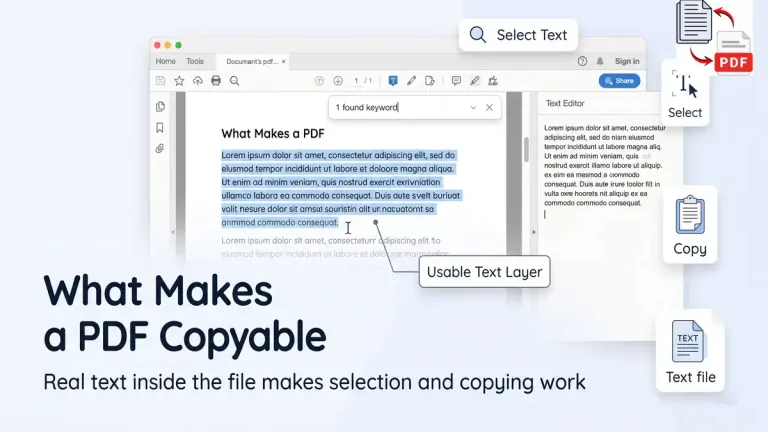
Using a PDF format you can easily copy the text content properly when the file contains a usable text layer. That means the words are stored as actual characters inside the document instead of only existing as part of an image.
When that text layer exists, highlighting works, search works, and copied text usually comes back in a usable form. This is also why direct extraction is often cleaner on digital PDFs. The tool is reading stored words instead of trying to interpret letter shapes from a page image.
If your PDF behaves like that, the direct PDF to Text route is usually the better option.
Signs That a PDF Is Usually Copyable
- You can highlight words normally inside the page
- Search finds words that are visible in the file
- Copy and paste returns readable text instead of empty output
- Direct extraction usually works without OCR
What Stops a PDF from Letting You Copy Text
The most common reason is that the file does not contain real text in the first place. A scanned PDF often stores each page as an image, which means the words you see are only part of that image. Since there are no stored characters inside the file, normal copying either fails or returns something broken.
There is also a weaker middle case. A file may already have OCR, but the scan quality may be poor. In that case, copying may work, but the result may contain wrong letters, merged lines, or awkward fragments that make the output harder to use.
You can read more about that process in this Adobe guide explaining what OCR is and how it works.
Searchable PDF vs Image Only PDF
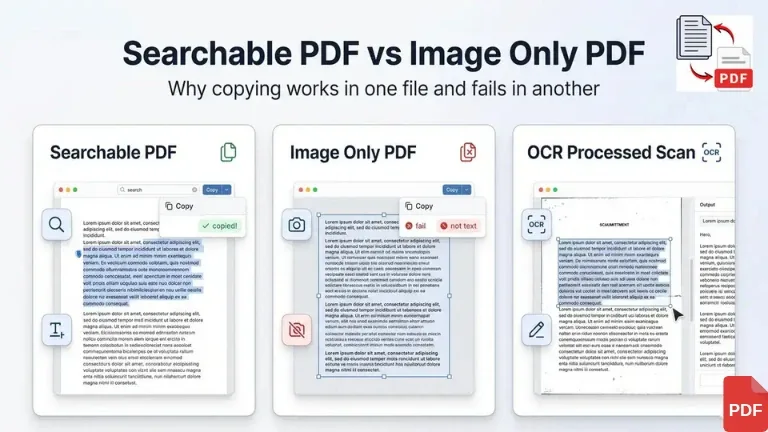
The easiest way to understand the issue is to compare what the file contains, not only how the page looks. A searchable PDF stores text in a usable text layer. An image only PDF stores a visual page without live text. A scanned file with OCR sits in the middle because it began as an image but later received a text layer through recognition.
| PDF Type | What is inside the file | What usually happens when you copy text |
|---|---|---|
| Searchable PDF | Real text layer | Copying usually works normally |
| Image only PDF | Visual page image | Copying fails or returns nothing useful |
| OCR processed scan | Image plus recognized text layer | Copying may work, but quality depends on the scan |
This comparison matters because it explains why a PDF can look readable and still fail when copying is attempted.
How to Check Why Copying Is Failing
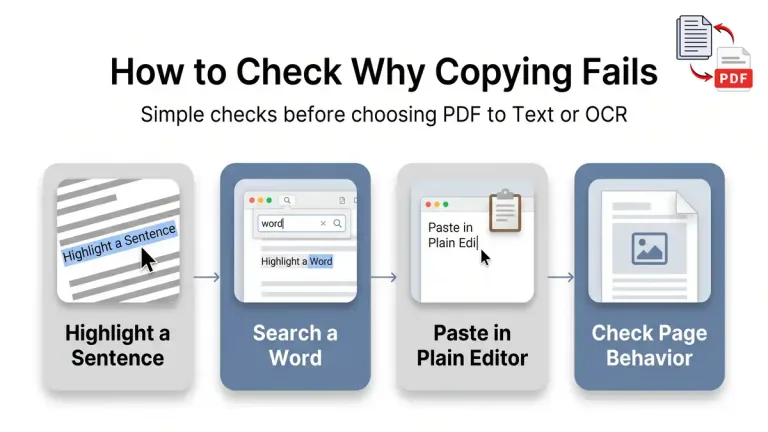
A quick test usually gives the answer faster than guessing. Start by trying to highlight one sentence. If the words select normally, the file probably contains a usable text layer. Then search for a word you can clearly see on the page. After that, copy one short paragraph and paste it into a plain text editor.
If the result comes back empty, scrambled, or badly fragmented, the file may be image only or missing a copyable text layer. That gives you a much better idea of what to do next.
Quick Checks That Usually Explain the Problem
- Highlight one sentence and see whether the words select normally
- Search for a visible word inside the file
- Copy one paragraph and paste it into a plain editor
- Notice whether the page behaves like text or like a photo
When to Use PDF to Text and When to Use OCR
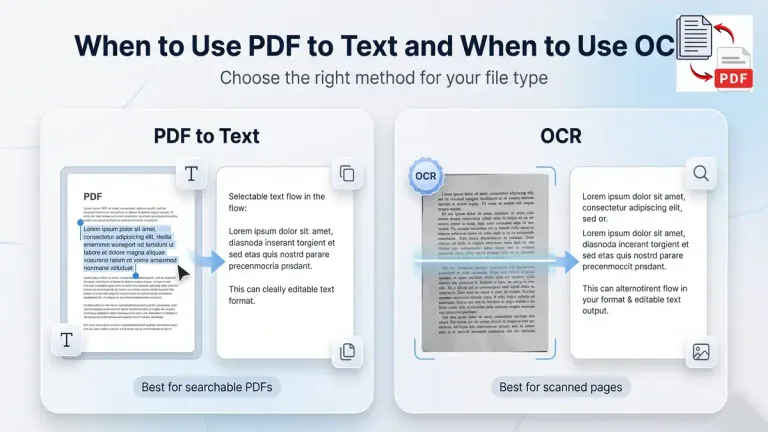
The next step becomes much easier once the file type is clear. If the PDF already contains selectable text, direct extraction is usually the better route because the document already has a usable text layer. In that case, a normal PDF to Text workflow usually gives cleaner output and saves time.
OCR makes more sense when the page behaves like an image. That usually happens with paper scans, photographed pages, receipts, forms, or archived records saved as PDF. If the words cannot be highlighted and copying returns nothing useful, OCR is usually the correct path because it reads visible letters from the page image and turns them into editable text.
Real World Examples
A contract exported from Word usually copies text without much trouble because the file begins as a digital document. A photographed receipt saved as PDF usually behaves very differently because the page is really an image. An office record scanned from paper may also look readable while still blocking normal copying.
There is also a middle case that causes confusion. A scanned file may already have OCR, which means copying works to some extent, but the pasted output may still contain small mistakes if the original scan was tilted, blurry, or low in contrast.
Best Practices Before You Try to Copy Text
A small check before copying saves time later. Instead of assuming every PDF works the same way, it helps to test the file first and then choose the right method.
- Check whether the text can be highlighted before doing anything else
- Use direct extraction for searchable PDFs with a usable text layer
- Use OCR for scanned files, photographed pages, and image only PDFs
- Paste copied text into a plain editor to test the result before reusing it
These checks are simple, but they stop a lot of unnecessary frustration. They also make the next workflow choice much clearer.
How TextToPDF.net Fits Into This Workflow
This topic fits naturally with texttopdf.net because your site already separates document tasks into focused paths instead of treating every PDF as the same kind of file. Searchable PDFs belong in the normal extraction flow, while scanned or image only documents belong in the OCR side of the workflow.
That means the article can guide readers toward the right tool without sounding forced. If the file already contains selectable text, the direct PDF to Text route makes sense. If the document behaves like a scan, the better path is PDF to Text OCR. You can also understand the broader difference from this Microsoft explanation of searchable PDF processing.
If the reader wants a wider explanation after this comparison, the strongest supporting pages are How to Extract Editable Text from PDF Files and Searchable PDF vs Scanned PDF. Those pages help the user go deeper without repeating the same problem from the same angle.
FAQs
Why can I read a PDF but not copy the text
That usually happens when the file shows an image of text instead of storing real text characters inside the document. The page looks readable on screen, but a normal copy action has very little usable text to work with.
How do I know if a PDF has a text layer
The quickest test is to highlight one sentence. If the words select normally, search works, and copied text returns usable output, the file probably contains a text layer.
Why does copied text from PDF come out broken
That often happens with weak OCR, multi column layouts, tables, or poor scan quality. In those cases, the file may allow copying, but the output does not hold together neatly when pasted as plain text.
Does a scanned PDF always need OCR
In most cases, yes. A scanned PDF usually needs OCR if you want searchable or editable text from the file. Without OCR, the page often behaves like a flat image.
Can OCR make a PDF searchable
Yes. OCR can add a text layer over a scanned page image, which allows searching, copying, and text extraction to work much better than before.
Final Note
A PDF can look readable and still refuse to copy text properly, which is why this problem confuses so many people at first. The real difference usually comes down to what the file contains underneath the page. One PDF stores real text. Another only shows an image of text.
Once that part becomes clear, the next step gets easier. You check whether the words can be highlighted, decide between direct extraction and OCR, and stop guessing why the file behaves the way it does. That one habit saves time and gives much cleaner results.