


Editable content is useful when you still need to make changes to it. But at some point, you need to save or share it in a stable format. A format that keeps the layout clean, headings consistent, and information structured.
PDF is one of those universal formats used for this purpose. And there’s a good reason for it. The Portable Document Format (PDF) preserves the appearance and structure of your content. It often keeps everything uniform across various devices. This makes it one of the most practical options for sharing and saving content.
So, how can editable content be converted into a PDF? Although it’s straightforward, not every conversion process gives you the same results. The method you choose may affect the final quality of your file. Let’s get into the details.
If you are working with a PDF in the opposite direction, our PDF to Text vs OCR guide explains how to choose between text extraction and OCR.
A Clear Overview of the Conversion Methods
Before choosing one of the methods given in this article, it’s crucial to know what’s happening under the hood. Each conversion method may handle your document differently.
The following overview table can help you decide on the method according to your particular needs.
| Feature | Microsoft Word | Google Docs | Online Converters |
|---|---|---|---|
| Font Embedding | Generally Preserved | Partial/Substitution | Reliable for Standard Fonts |
| Image Quality | Generally Preserved | May Vary | Usually Remains the Same |
| Hyperlinks | Preserved | Preserved | Preserved in Quality Tools |
| Metadata | Carried Over | Minimal | Mostly Clean / Privacy-Friendly |
| Setup Required | Software Install | Google Account | None, Instant Access |
| Best For | Complex Desktop Documents | Cloud Collaboration | Speed, Flexibility, Any Device |
Reviewing this table can help ensure that the output quality stays true to your needs without causing unnecessary hassles.
3 Simple Ways to Convert Editable Text into a PDF
Converting editable text into a PDF doesn’t require any technical expertise at all. The given methods are simple and work on common devices like PCs, laptops, phones, etc.
Let’s learn each of them one by one.
Through Microsoft Word
If you have Microsoft Office installed on your computer, then MS Word is the simplest way to convert text into a PDF. You can carry out conversion through this method even when you don’t have access to the internet. Follow the given process. Microsoft also documents the official steps for saving or converting Office files to PDF.
- Start by either pasting your editable content directly into the Word file or opening your text file from the internal storage.
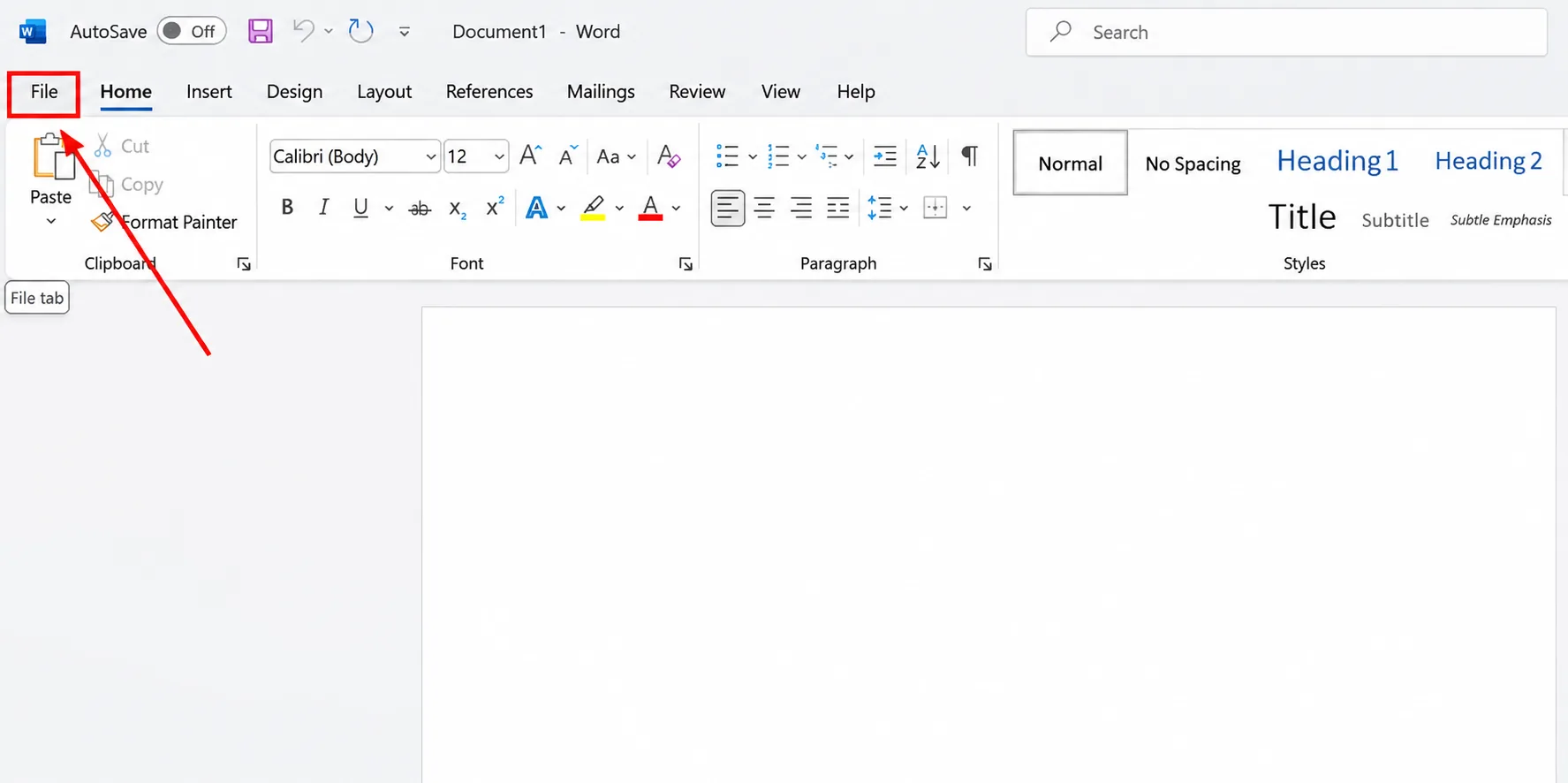
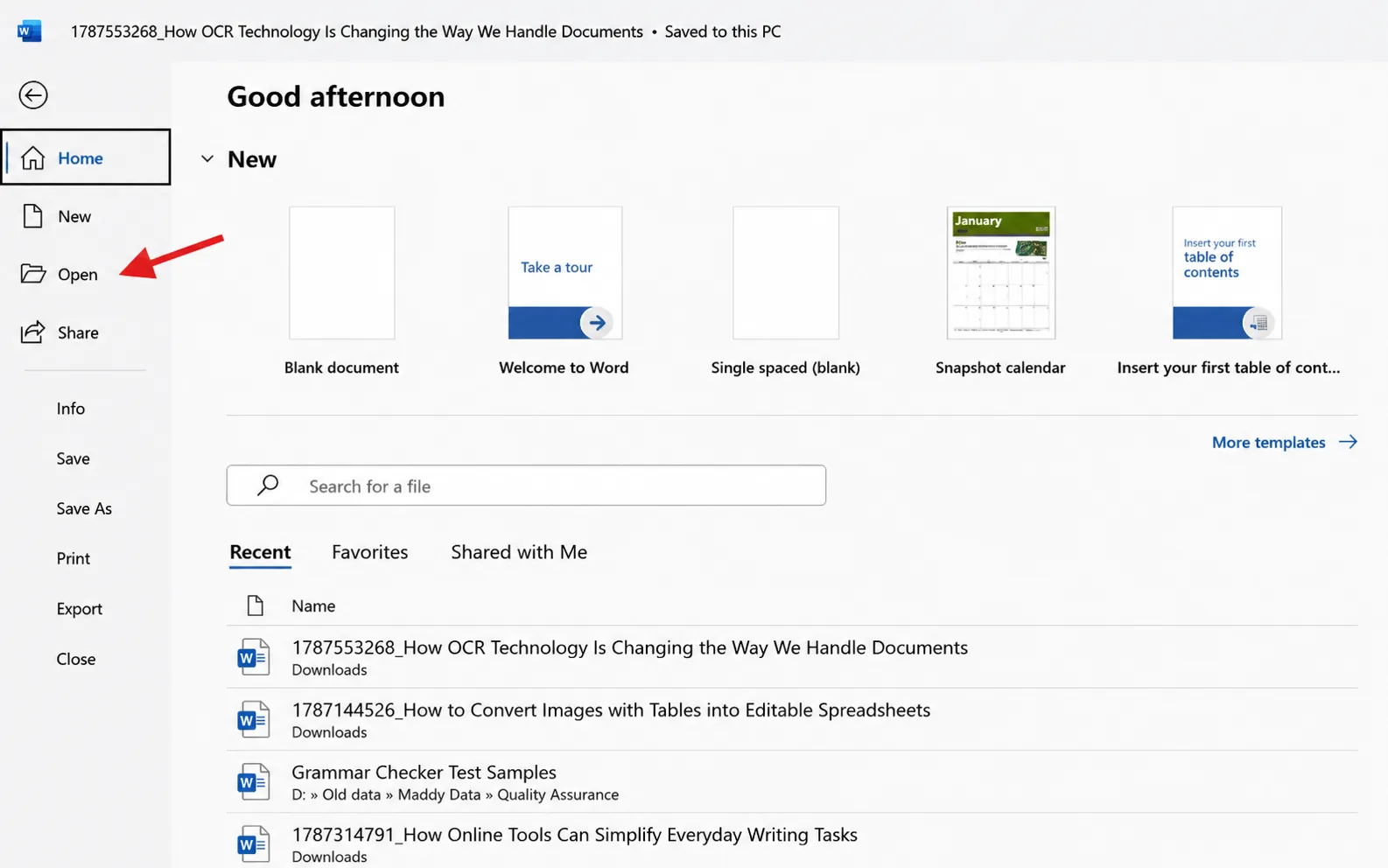
- If you want to import your text rather than pasting it, navigate to “File,” then click “Open.”
- Once the text or editable content is successfully imported, select “File → Save As.”
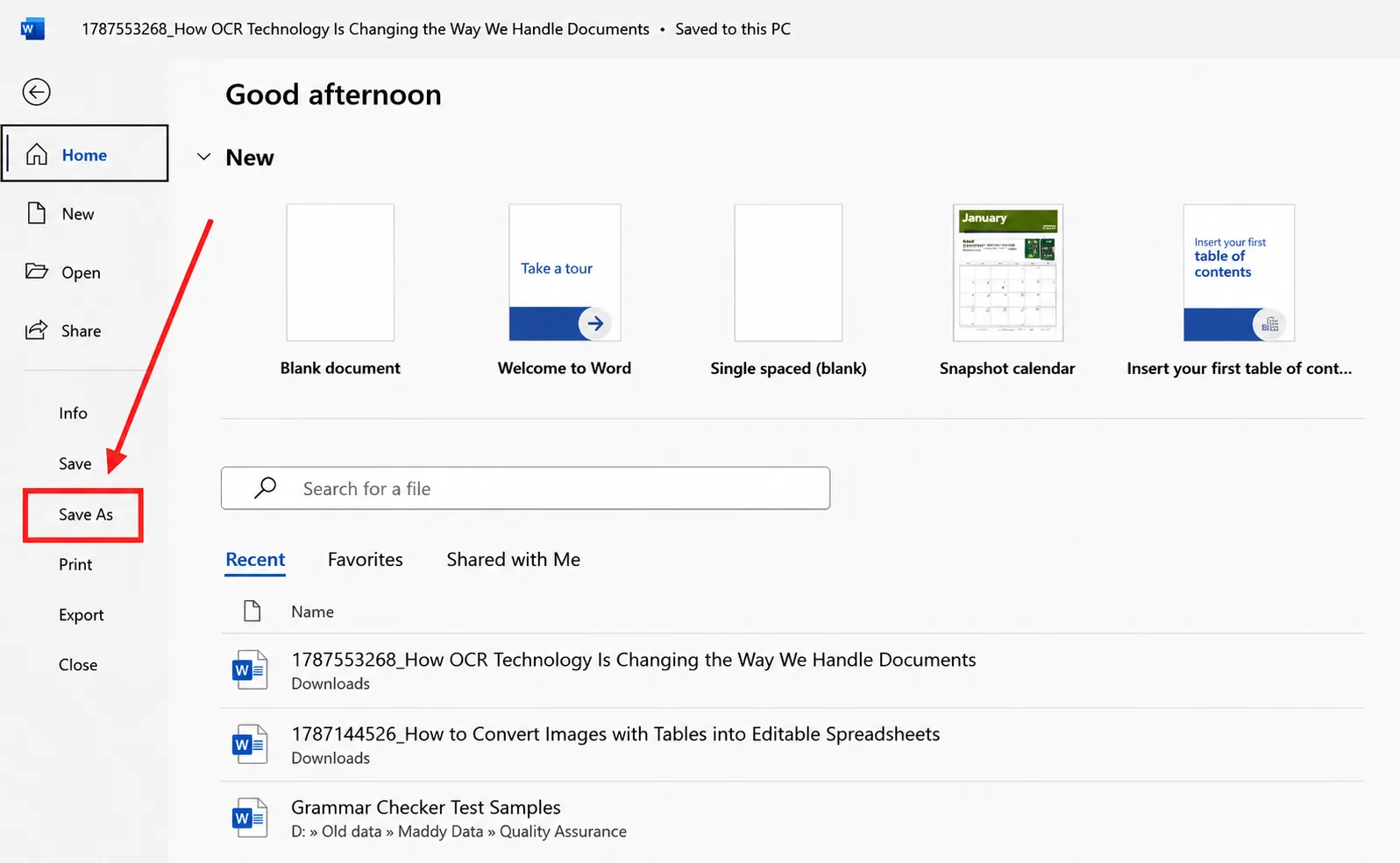
- When you click “Save As,” a window will open. From there, you need to choose “PDF” as the file type and then click the “Save” button.
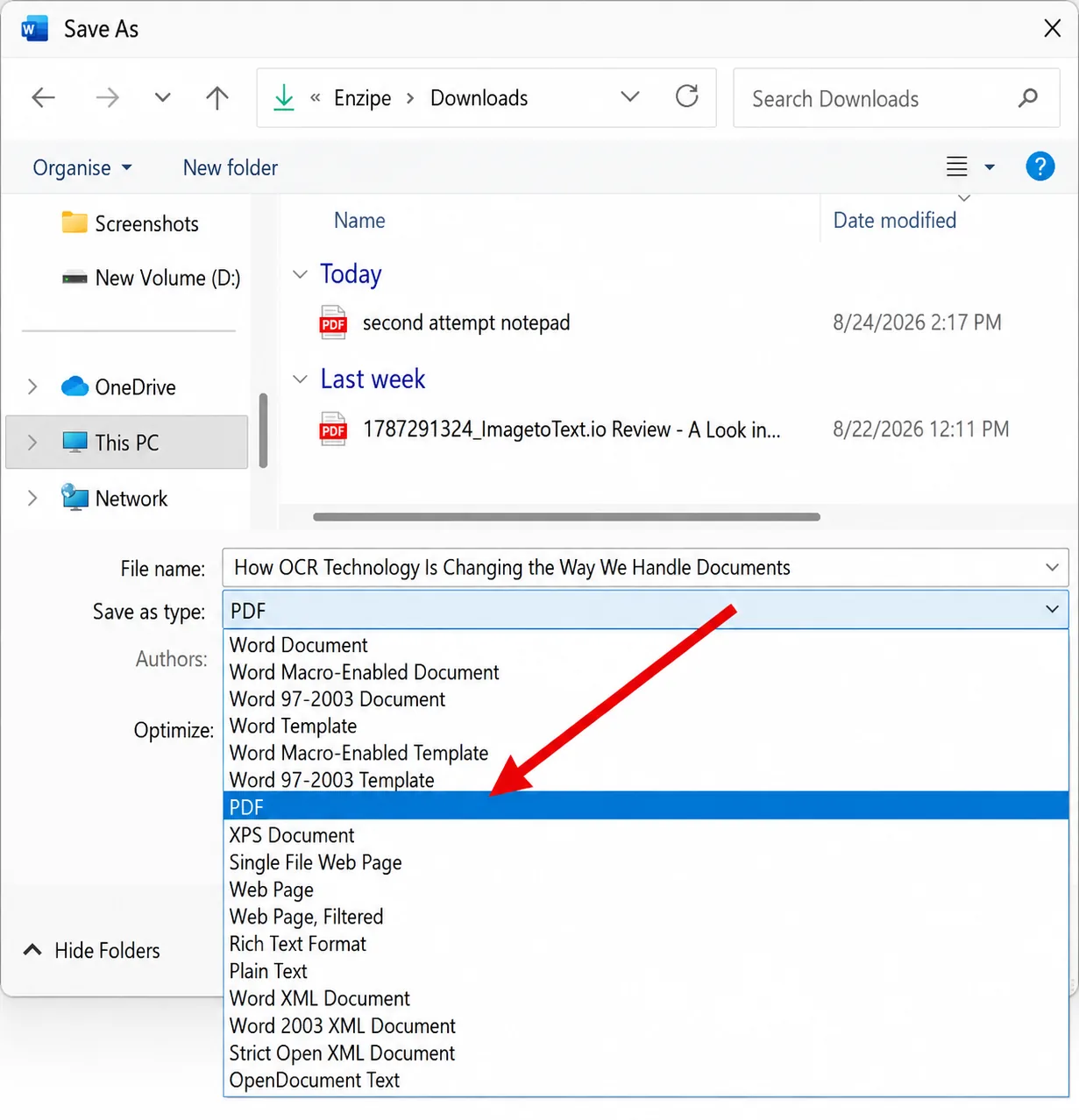
The PDF file is saved on your internal storage. It is a copy of the original file, just in a different format. The original version of the editable content remains in MS Word, so you can make any necessary changes later.
If you want to understand how the Word workflow compares with plain text conversion, read our text to PDF vs Word to PDF guide.
Through an Online Converter
This is a convenient method when you need quick conversion without installing any software or application on your device. It’s a simple process that takes only a few clicks. However, it requires an active internet connection and a web browser to access the online converter. Follow these steps.
- Open Google and search for a text to PDF converter. Explore a few available options and choose one according to your preferences. Then, paste or upload your content into the online tool you selected. You can also use the TextToPDF online converter directly when you want to prepare and convert text in one place.
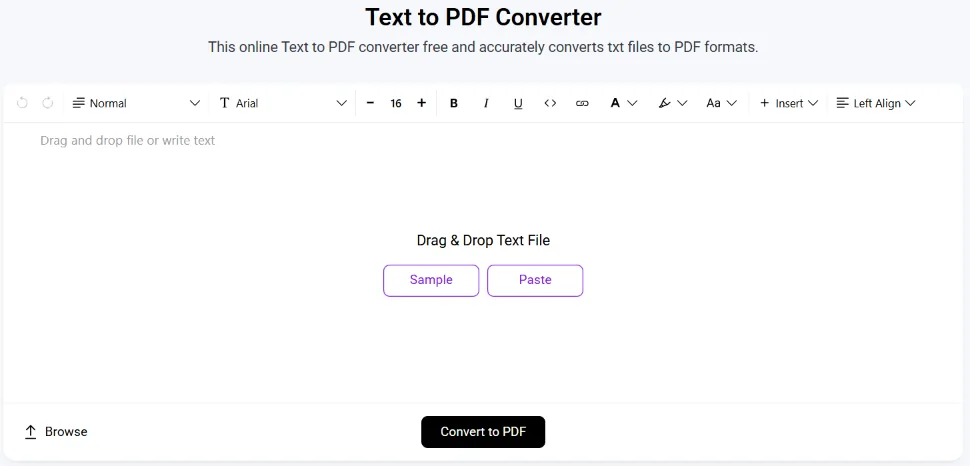
Link: Text to PDF converter used in the example
- After adding your text, simply click on the “Convert to PDF” button, and your content will be downloaded as a PDF file.
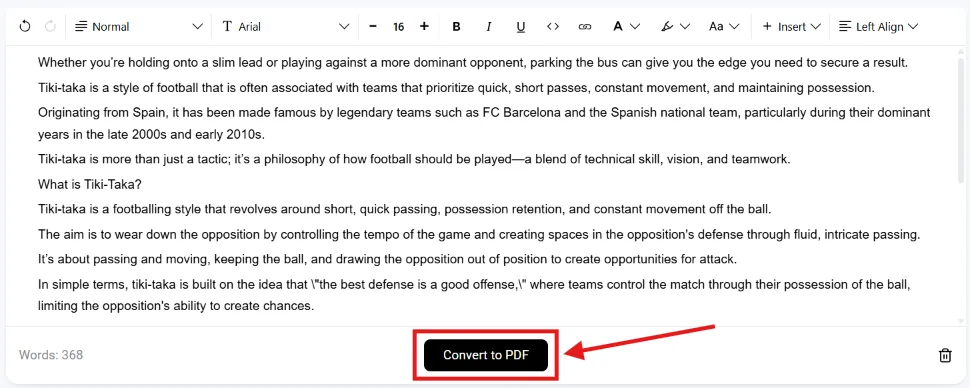
Online converters can save time on conversion. They mostly work well for simple documents. But if your content contains complex layouts, tables, or images, review the tool’s output carefully. Take a few minutes to cross-check critical information such as names, dates, and headings, and make adjustments if needed. For more guidance, see our guide to common text-to-PDF problems.
Through Google Docs
Lastly, we have another simple method that gives users various options to customize the layout and improve the structure of their content before converting it. This method generally requires an internet connection, although offline functionality is available in supported configurations, and a Google account. Here’s the step-by-step process. Google’s official help also explains how to download a copy of a Google Docs file.
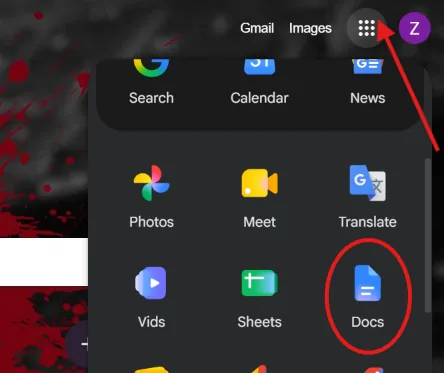
- Go to your web browser, where you are logged in, and open Google Docs.
- From here, open a blank document.
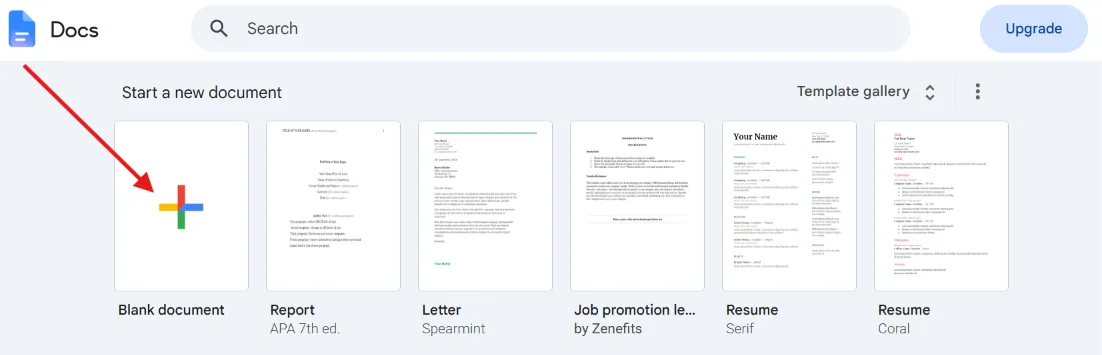
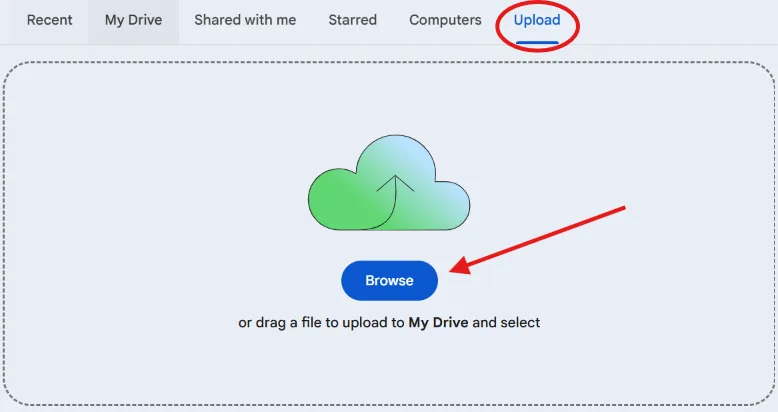
- Now, you can either paste the content directly into the doc or upload it. Go to File and then select “Open.”
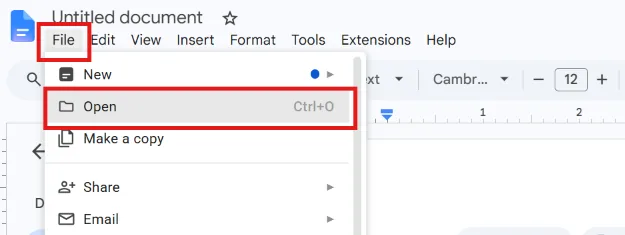
- A dialog box will appear. From here, you can upload your content into Google Docs.
- Once the content is successfully pasted or uploaded, make any necessary updates that you want. Then, proceed to “File → Download → PDF Document (.pdf)” as shown in these screenshots.
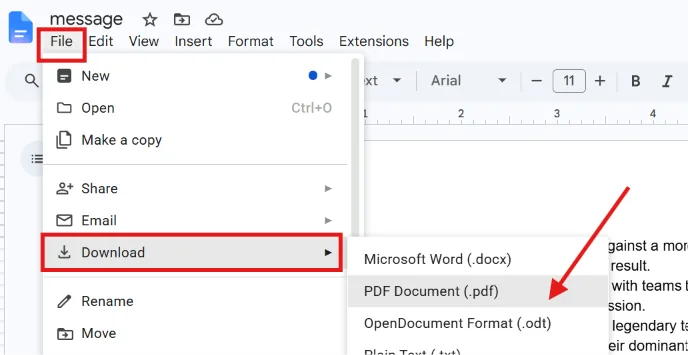
The PDF version of your content will be created and saved on your device. This method is especially useful when multiple people need access to the same editable version before the content is finalized and saved as a well-structured PDF document.
For practical advice on headings, spacing, and readable structure before export, see our text to PDF formatting guide.
Conclusion
Converting editable content into a PDF format is a very simple task. Microsoft Word, online converters, and Google Docs can all be used for this purpose.
However, the method you choose for conversion can have a certain impact on the final result. So, the most suitable method depends on your specific needs. It particularly depends on how much control you want over your content.
Regardless of the method, proofreading the converted PDF can help you dot the i’s and cross the t’s before saving or sharing the file. This can also help prevent unnecessary confusion later.
If the finished PDF is meant for sharing across devices, our guide to why PDFs are used for sharing digital documents explains the practical benefits of the format.